Sonde · research instrument

Three voices, seen.

Sonde is the instrument behind our research into voices: who is speaking, and when a voice is one nobody has heard before. Every moment of a recording becomes a point. Every voice settles into its own region. Every word lands where it was said.
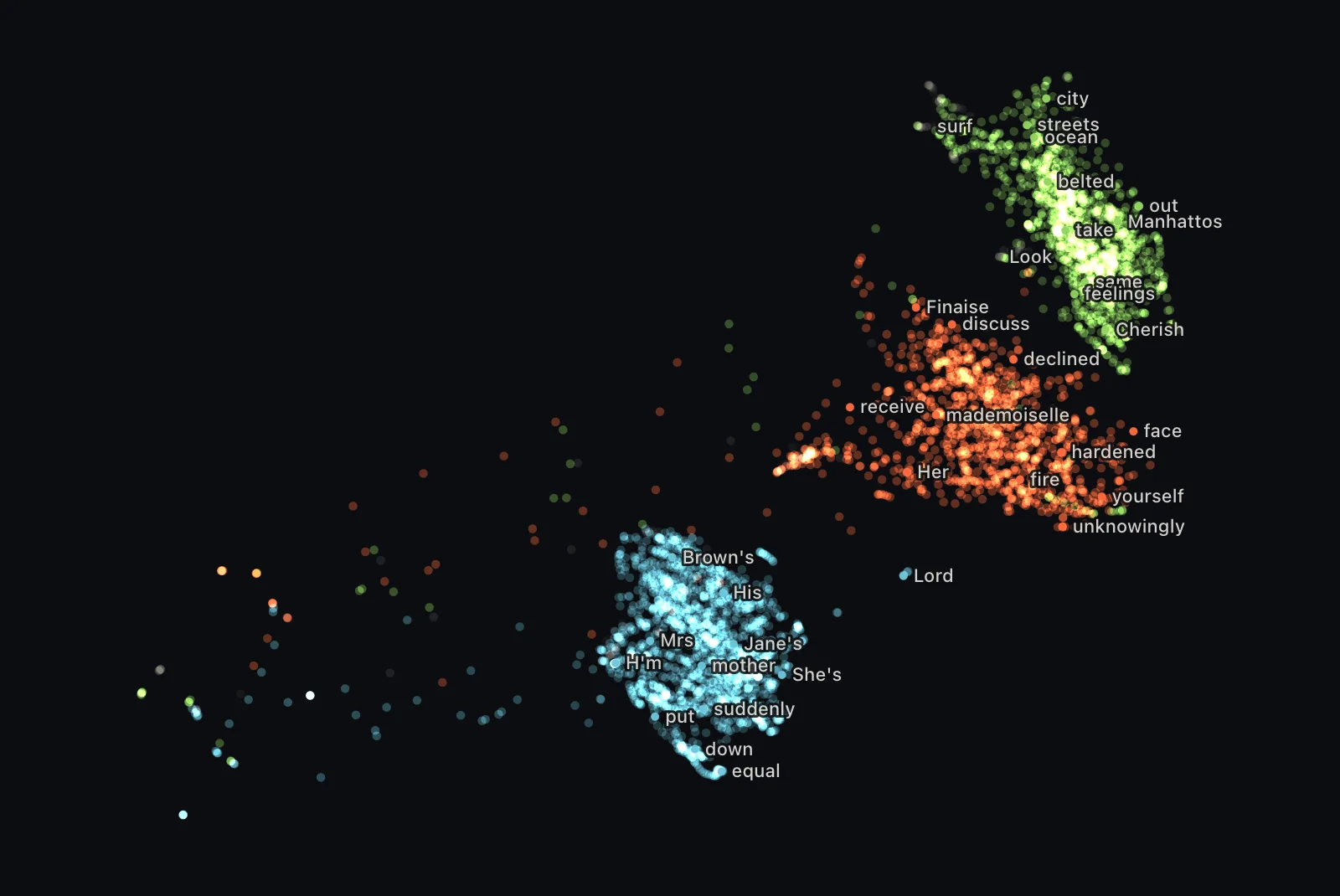
A three-dimensional scatter of thousands of points in three colors, one cluster per voice, with words printed where they were spoken

Three readers · 2 min 7 s · 12,682 moments · nobody told it who was whoOne Two Three

The same two minutes, four ways
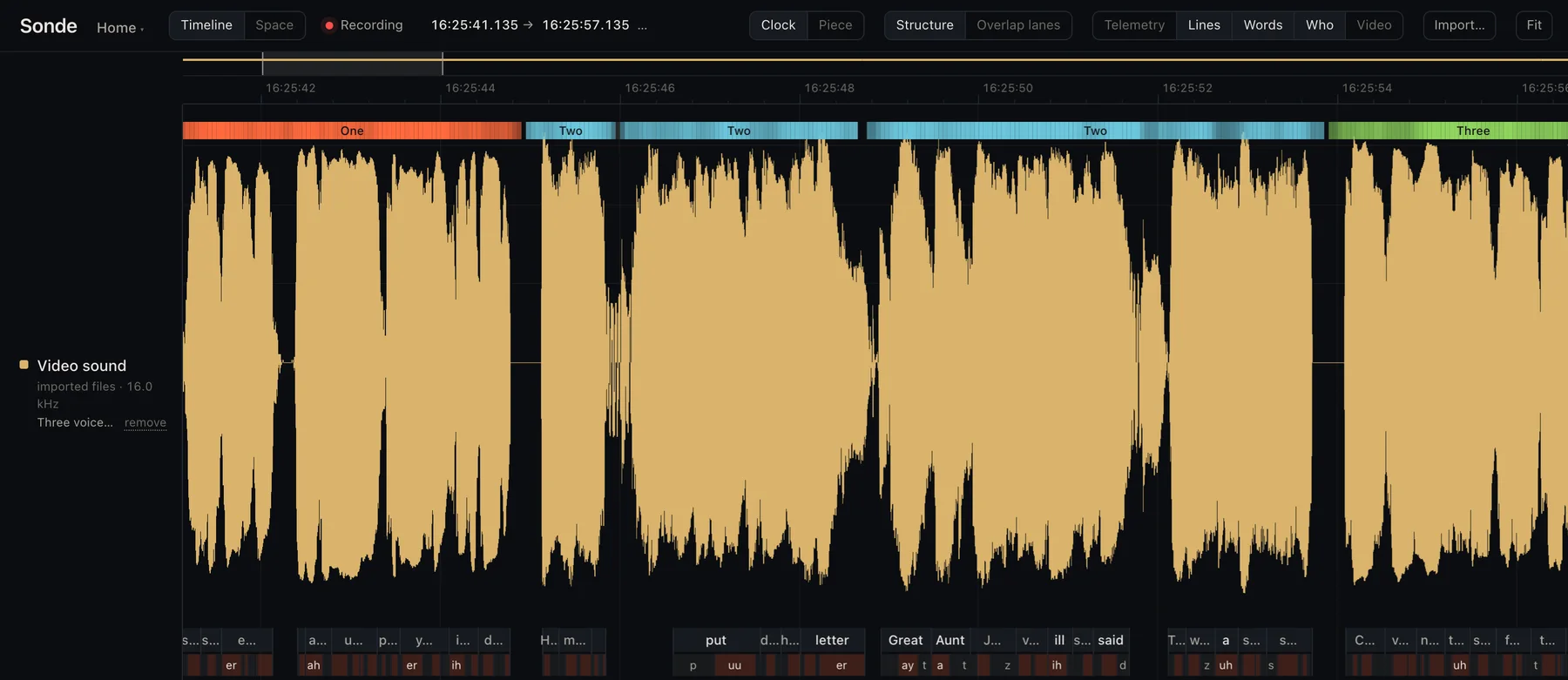
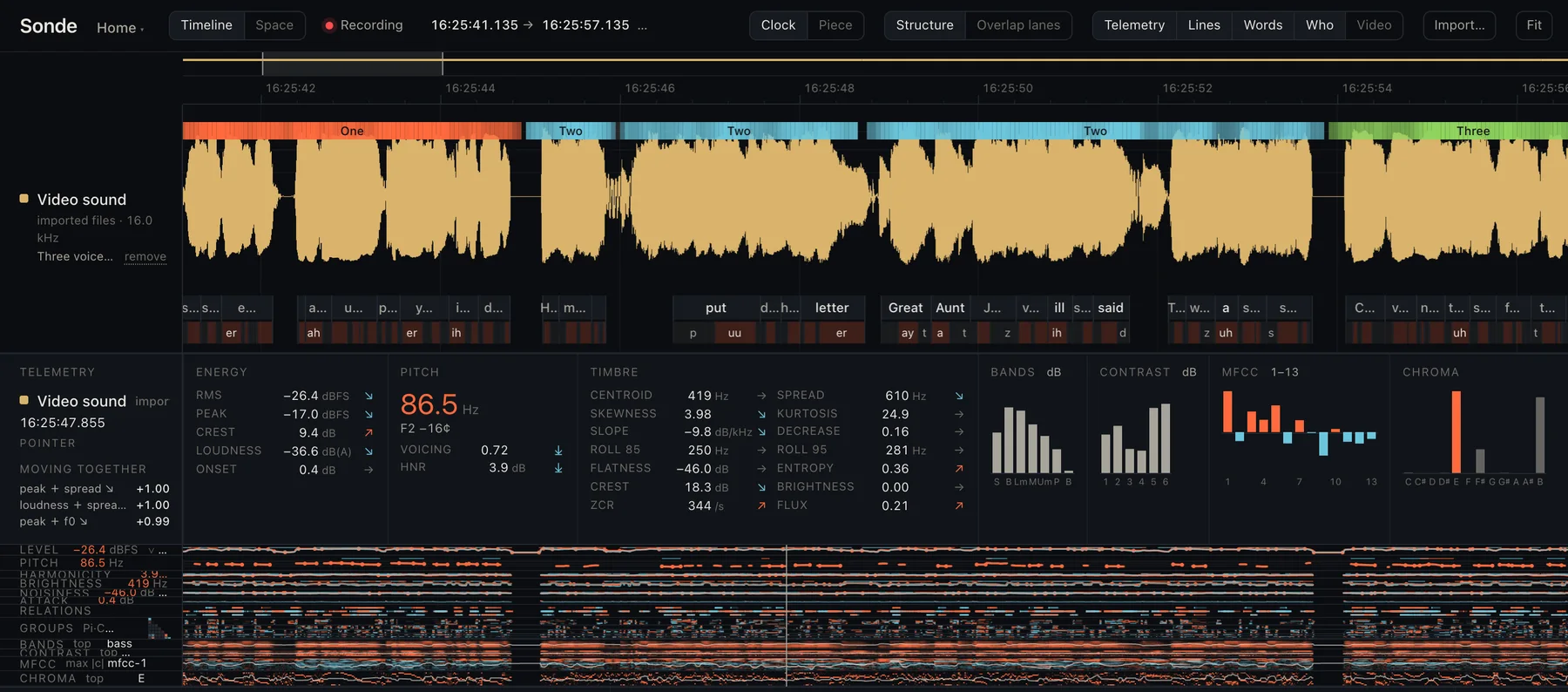
Sonde timeline: a waveform with a colored lane above naming each voice and a lane below placing each word and sound on it
The timeline. The waveform, a lane that says who is talking at every moment, and each word fitted onto the sound it came from, down to the vowels.
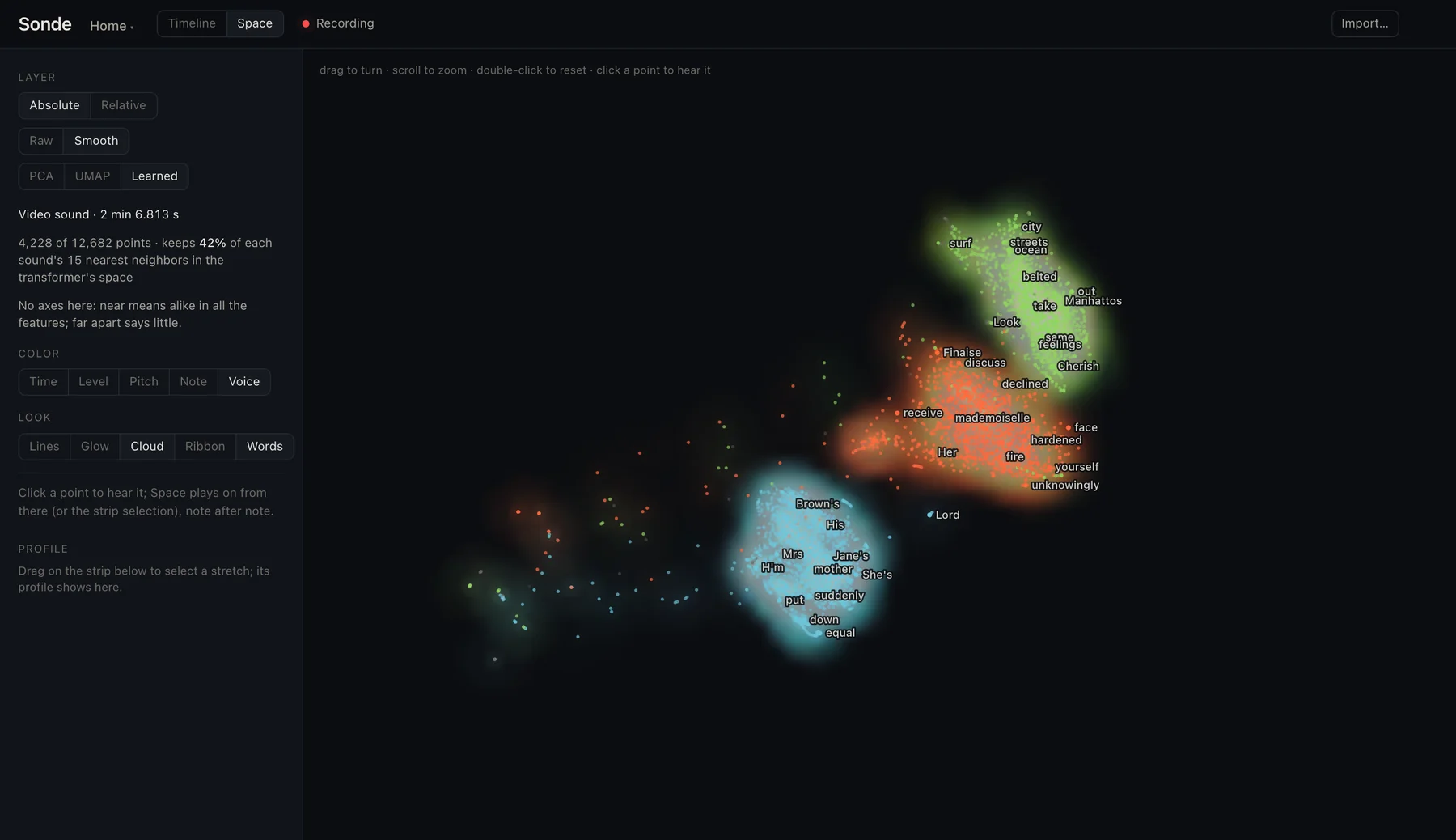
Sonde space view: three soft clouds of points, one per voice, with words floating in each
Where each voice lives. Three clouds, three people. The words inside are the ones they said.
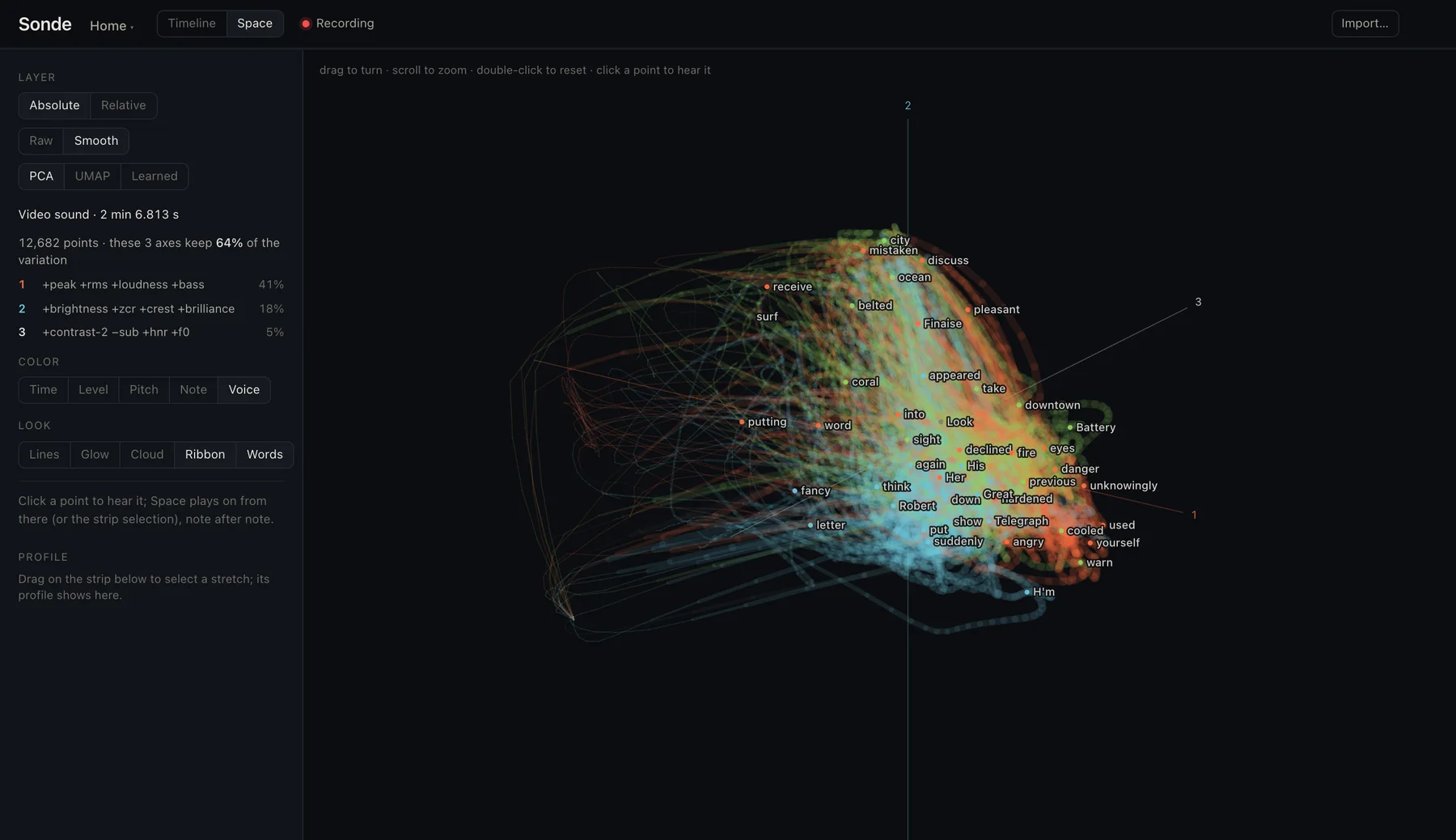
Sonde space view: colored ribbons tracing the path of the recording through sound, with words along the path
The path. The recording as one line through sound, thick where it is loud, colored by who is speaking.
Sonde timeline with the telemetry panel open: energy, pitch, timbre, bands, contrast and chroma readouts under the waveform
The instrument panel. Sixty measurements of the sound, a hundred times a second, read off at the pointer.

What this is

Hearing people apart.

Transcription has become good. Knowing who said what has not. Sonde is where we work on that: telling voices apart in real recordings, with almost no help, and knowing when a voice is new. What you see above is the instrument, pointed at three readers it had never heard.

A short film of it running is coming. Until then, these are stills.

Voices: public-domain LibriVox readings. Sonde is not released. hello@dutchdata.io